 VapeWholesaleHub
Sustainability and Take Back Programmes for Nicotine — Three Price Tiers
Retailers rarely lose money on nicotine because of price. They lose money because the first container was bought on a photograph. This page walks through what actually matters when you source nicotine at scale, written from the buying desk rather than the marketing department.

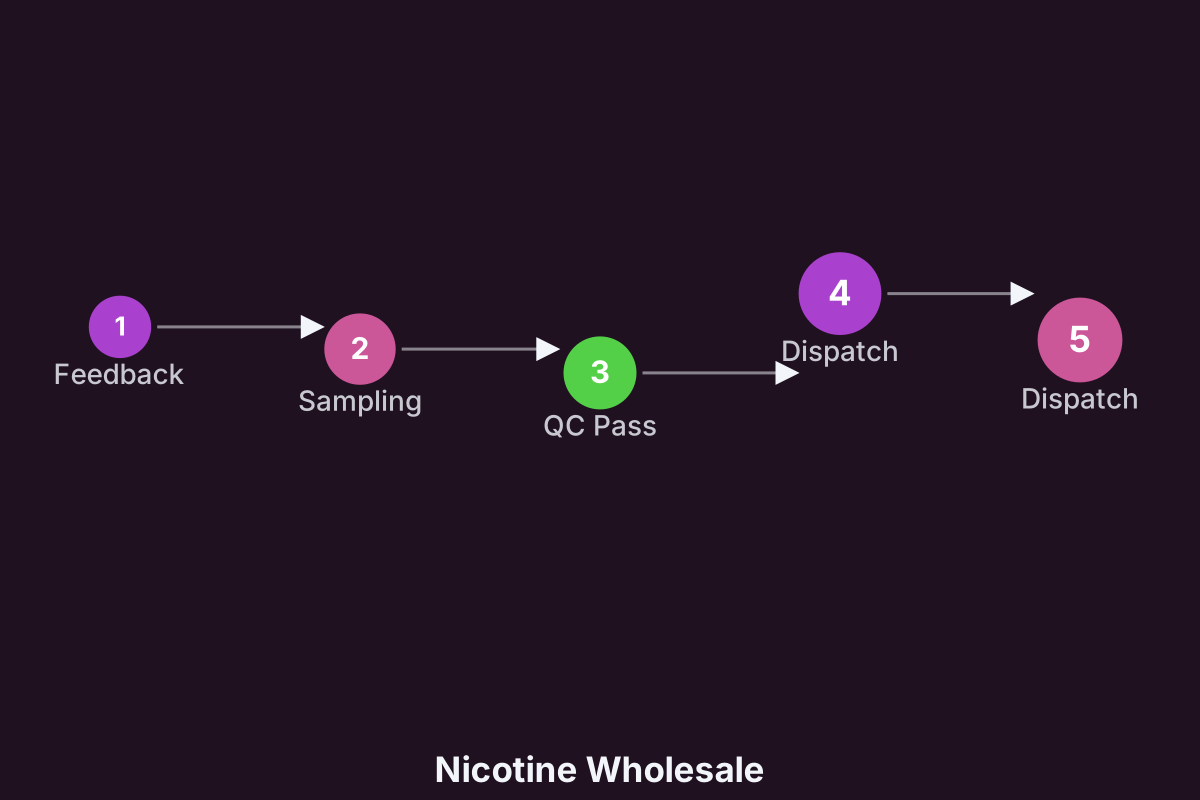
Inspection Before Dispatch
AQL sampling gets a lot of attention, but for nicotine the more useful habit is simply measuring the same three things on every single batch. Trend lines catch problems that pass/fail checks miss.
- Write the complaint threshold into the order terms.
- Keep sealed retained samples from every production batch.
- Start with a mixed carton and let your own sell-through decide.
- Check carton dimensions against your freight quote before confirming.
- Plan the switch from air to sea freight before you need it.
What Nicotine Really Costs Landed
Build nicotine price tiers around order sizes your customers actually place. Tiers that only make sense on a spreadsheet get ignored, and you end up discounting ad hoc instead.
Indicative reference points for planning purposes: entry tier from USD 1.45 per unit at 1000 units, mid tier at USD 1.85, and volume tier at USD 0.61 for full container quantities. These figures move with specification, packaging and freight, so treat them as a shape rather than a quote.
Trends Worth Watching
The most durable nicotine lines over the last few years have been unglamorous and consistent. Novelty sells once; reliability sells every month.
Demand for nicotine has been steadily rebalancing. The early phase rewarded whoever could ship fastest; the current phase rewards whoever can ship the same thing twice. That shift favours buyers who invest in specification rather than price shopping.
Logistics That Protect Margin
Plan the nicotine customs paperwork at the same time as the order, not when the goods are on the water. A missing document costs more in demurrage than the entire freight saving from a cheap forwarder.
Reading a Nicotine Spec Sheet
Pay attention to how a nicotine supplier responds when you ask for a tolerance they do not want to commit to. The hesitation is usually more informative than the eventual answer.
| Product category | Open system |
|---|---|
| Resistance band | 0.6 - 0.8 ohm |
| Capacity tolerance | +/- 2% |
| Puff count method | Declared by capacity |
| Master carton | 200 units |
| Carton weight | 9.3 kg |
| Shelf life | 24 months |
| Storage | 15-25 C, dry, away from direct light |
Selling Nicotine at Store Level
Online, shoot nicotine at a consistent scale across the range. Customers compare by eye, and inconsistent product photography creates returns that have nothing to do with the product.
Rotate nicotine facing rather than price for the first month. Visibility changes sell-through more reliably than a small discount, and it does not train customers to wait for offers.
Practical Checklist
- Confirm the current customs classification with your own broker.
- Check carton dimensions against your freight quote before confirming.
- Keep sealed retained samples from every production batch.
- Ask how the factory measures puff count, then compare like with like.
- Write the complaint threshold into the order terms.
- Rotate stock by batch code rather than by delivery date.
Frequently Asked Questions
Can you match an existing product I already sell?
Often yes, provided we can measure it properly. Send a physical sample and we will report back on what can be matched, what will differ slightly, and why. An honest gap is more useful than a vague promise.
Is there support for in-store material?
Yes. Shelf talkers, counter cards and simple planogram suggestions are available for nicotine ranges that reach a sensible volume. Most retailers find the plain strength and flavour cards do the most work.
What if I only need a small first order?
That is normal and sensible. A mixed carton lets you test nicotine in your own market before committing to a production run, and the specification you approve at that stage carries through to larger orders unchanged.
Do you provide compliance documents?
Every shipment leaves with the documentation set relevant to your market, including batch records and test reports where required. Your local rules still determine what you must file, so confirm those with your broker before import.
Next Step
Whatever you decide, decide it against numbers you can check on arrival. That single discipline removes most of the risk from importing nicotine.
Related Reading
- Nicotine Specifications Every Buyer Should Check — 2026 Buyer Notes
- Nicotine Payment Terms and Risk Management — Established Chains
- Nicotine Market Demand: Reading the Numbers — High Volume Buyers
- Nicotine Finish Options and Perceived Quality — Private Label Programmes
- Nicotine Growing From Pallet to Container — Specialist Vape Shops
- Nicotine Customer Feedback Loops That Improve Reorders — Premium Shelf Programmes