 VapeWholesaleHub
Nicotine Market Demand: Reading the Numbers — Replenishment Cycles
Most first time importers of nicotine ask the same five questions. This page answers them in the order they usually arrive, with the numbers we quote internally rather than round marketing claims.
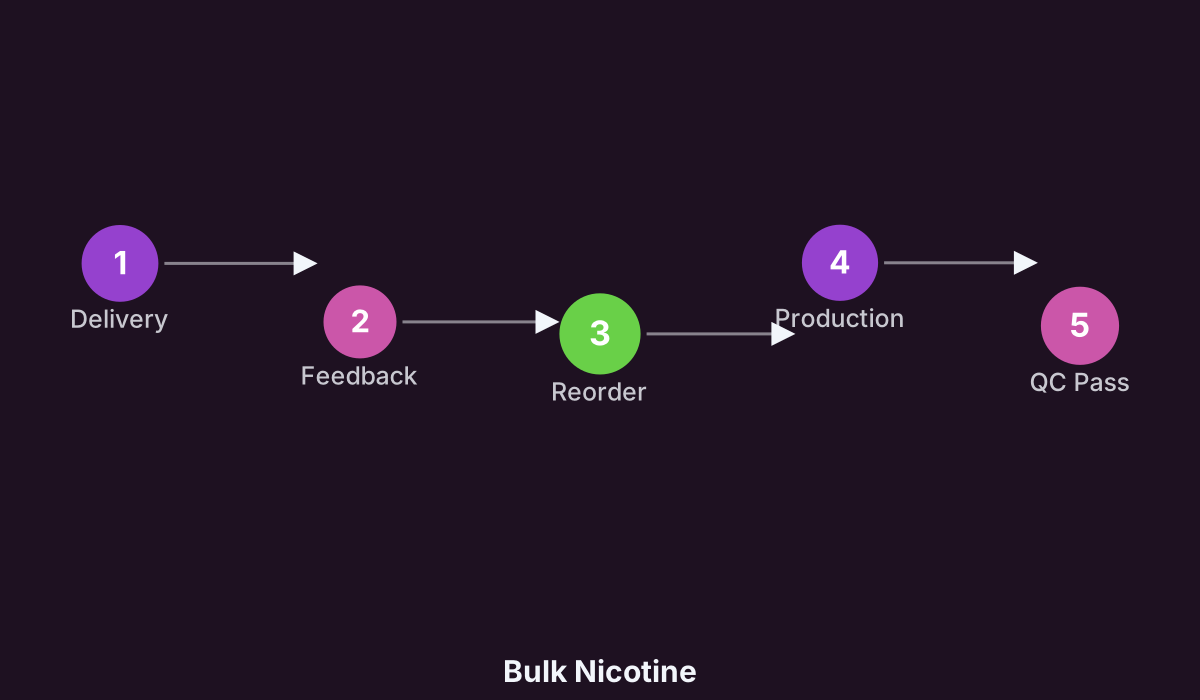
Reading a Nicotine Spec Sheet
Two specifications that matter more than buyers expect: the seal integrity after a drop test and the consistency of the draw from first use to last. Both are measurable before you commit to volume.
A written nicotine specification should be short enough to read in a minute and precise enough to argue about. If a factory cannot confirm a number in writing, assume the number is whatever is cheapest that week.
| Product category | Accessory |
|---|---|
| Resistance band | 0.6 - 0.8 ohm |
| Capacity tolerance | +/- 3% |
| Puff count method | Machine cycle 2s on / 18s off |
| Master carton | 400 units |
| Carton weight | 5.4 kg |
| Shelf life | 12 months |
| Storage | 15-25 C, dry, away from direct light |
Inspection Before Dispatch
Most defects in nicotine are not dramatic. They are loose tolerances, a slightly thin seal, a mouthpiece that clicks. Left alone they turn into leak complaints, which are the single most common reason a retailer drops a line.
- Confirm the current customs classification with your own broker.
- Keep sealed retained samples from every production batch.
- Check carton dimensions against your freight quote before confirming.
- Model landed cost, not ex-works price, when comparing quotes.
- Write the complaint threshold into the order terms.
Turning Nicotine Into Repeats
On shelf, nicotine sells on clarity. A plain shelf talker that states strength and flavour in two words outperforms a beautifully designed but vague display, because most purchase decisions here take under ten seconds.
A nicotine display that answers strength and flavour without staff involvement outsells a prettier one that does not. Most customers will not ask, so the fixture has to do the work.
Market Signals
Flavour cycles in nicotine are shortening, which argues for smaller test orders and faster feedback loops rather than large speculative buys on a predicted winner.
Traceability is moving from a nice-to-have to a requirement in several nicotine markets. Building the habit now is cheaper than retrofitting record keeping under pressure later.
Logistics That Protect Margin
Ask your forwarder for the nicotine transit history on your lane, not the advertised schedule. The gap between the two is the buffer you should build into your reorder point.
Freight is the hidden half of nicotine unit economics. A denser master carton can save more per unit than a hard negotiation on factory price, because the saving repeats on every reorder rather than once.
Pricing and Margin
When you model nicotine pricing, build in a realistic shrink figure. Even a well run line loses a small percentage to damage, expiry and sampling. Pretending that number is zero is how a healthy looking margin turns negative.
Indicative reference points for planning purposes: entry tier from USD 1.06 per unit at 1000 units, mid tier at USD 1.71, and volume tier at USD 0.80 for full container quantities. These figures move with specification, packaging and freight, so treat them as a shape rather than a quote.
Practical Checklist
- Check carton dimensions against your freight quote before confirming.
- Plan the switch from air to sea freight before you need it.
- Write the complaint threshold into the order terms.
- Rotate stock by batch code rather than by delivery date.
- Start with a mixed carton and let your own sell-through decide.
- Agree the tolerance band in writing before approving artwork.
Frequently Asked Questions
What does a sample pack usually include?
A typical nicotine sample pack covers the strengths or variants you are most likely to list, packed so you can evaluate them side by side. Tell us which lines you are considering and we will match the pack to that rather than sending a generic selection.
How do you handle a short shipment?
Cartons are counted and weighed before dispatch and the figures are shared with you. If something is short on arrival, the packing record and the carrier documentation are both available, which keeps the claim straightforward.
What if I only need a small first order?
That is normal and sensible. A mixed carton lets you test nicotine in your own market before committing to a production run, and the specification you approve at that stage carries through to larger orders unchanged.
Can I visit the production facility?
Yes, and we encourage it for larger programmes. Visits are most useful when you already have a draft specification, because you can then check the specific processes behind the numbers you care about.
What happens if my market changes its rules?
Regulations move, and packaging or documentation sometimes has to follow. We keep approved artwork files on hand so that a required change is a reprint rather than a redesign, which keeps the cost and delay down.
Next Step
Nobody wins when a first order is too large to learn from. Start with a mixed carton, check how it moves in your own market, then scale the lines that earned the shelf space.
Related Reading
- Nicotine Emissions and Leak Testing Methods — Online Sellers
- Nicotine Market Demand: Reading the Numbers — Seasonal Demand Peaks
- Nicotine OEM and ODM: Which Model Fits Your Business — Low Minimum Quantities
- Nicotine Specifications Every Buyer Should Check — Real Numbers Only
- Nicotine Sample Approval Meeting Agenda — Three Price Tiers
- Nicotine Auditing Your Own Supply Chain — a Printable Checklist